
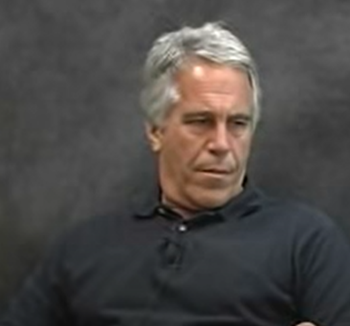
For years, Americans have been told the Jeffrey Epstein story is settled. The wealthy financier and convicted sex offender died in a Manhattan jail cell in 2019, ruled a suicide by the medical examiner. Case closed.
Except… new evidence circulating from previously discussed medical records and testimony is reopening a question many people thought would never go away: what if the body examined after Epstein’s death wasn’t actually Epstein at all?
The claim centers on a striking medical contradiction that has fueled fresh speculation online.
According to documents cited in Epstein’s own medical records, the financier had undergone a radical prostatectomy — a surgical procedure that completely removes the prostate gland. Medical paperwork reportedly referenced in the Epstein files and lab records indicates the procedure had already taken place prior to his arrest.
A radical prostatectomy is not a minor surgery. It removes the entire prostate gland. Once removed, it does not simply grow back.
And that’s where the mystery begins.
The official autopsy report performed after Epstein’s death reportedly described his prostate as still present and slightly enlarged.
That detail directly contradicts the medical history suggesting the organ had been surgically removed years earlier.
Medical experts have been quick to point out that modern medicine does not currently have the capability to regrow or replace a fully functioning prostate gland in humans. While experimental tissue engineering research exists, there is no clinical procedure that could restore an entire prostate after a radical removal.
In other words, if Epstein truly underwent a radical prostatectomy — as the records suggest — then the presence of a prostate during the autopsy raises an obvious and troubling question.
How could it be there?
Critics of the official narrative argue there are only two possibilities.
The first is a medical miracle — that Epstein somehow regrew a fully functioning prostate gland despite current science saying it cannot happen.
The second possibility is far more explosive: the body examined in the autopsy may not have been Epstein at all.
That theory has circulated among skeptics since the day Epstein died inside the Metropolitan Correctional Center, where cameras malfunctioned, guards allegedly fell asleep, and one of the most high-profile inmates in the world was left unmonitored.
Those unusual circumstances have fueled countless conspiracy theories for years. The prostate discrepancy is now being cited by some commentators as one of the most concrete inconsistencies yet uncovered.
Some commentators have gone as far as to claim the contradiction is “close to conclusive proof” that Epstein’s death may not have unfolded the way the public was told. Others say the discrepancy deserves serious investigation rather than dismissal.
To be clear, there is currently no official confirmation that Epstein is alive, and the body examined by the New York medical examiner was identified as his.
But the prostate contradiction is undeniably unusual — and it adds yet another unresolved question to one of the most controversial deaths in recent history.
Whether it turns out to be a clerical mistake, a misunderstanding of medical records, or something far more disturbing, one thing is certain:
The Epstein story still isn’t finished.