
A 31-year-old Swiss-Turkish dual national stabbed three men at the Winterthur railway station in Switzerland on Wednesday morning while shouting "Allahu Akbar" — and the kicker is that authorities already knew exactly who he was. He'd been flagged back in 2015 for spreading Islamic State propaganda. He was released from a psychiatric facility the day before the attack. But hey, nobody could've seen this coming.
What a mystery. A guy with a documented ISIS history screams "God is great" in Arabic while plunging a knife into strangers at 8:30 in the morning, in front of terrified children, and we're supposed to wait for the "official investigation" before drawing any conclusions. Give me a break.
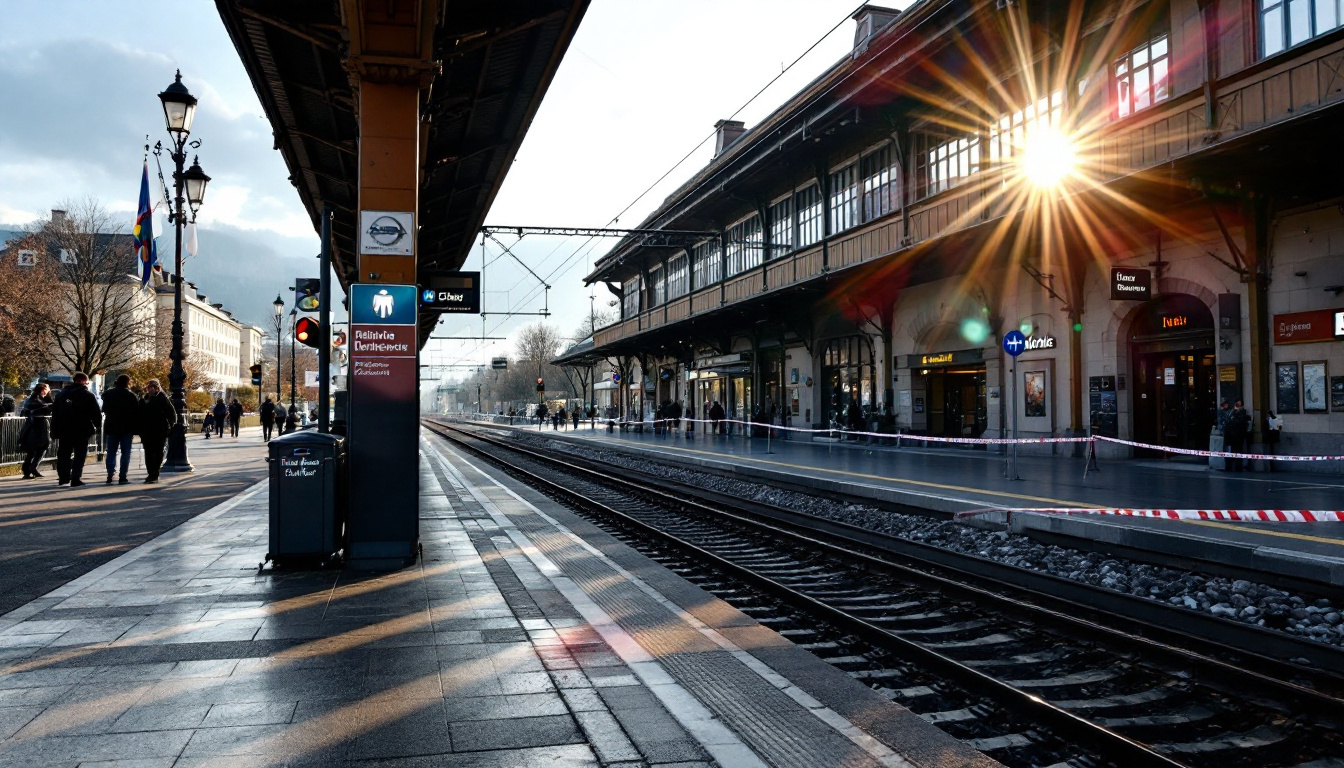
The attack happened at the Winterthur train station in the canton of Zurich, a city in northeastern Switzerland that most Americans couldn't find on a map but that just became Exhibit A in Europe's ongoing refusal to deal with radical Islamic terrorism. Three Swiss men — ages 28, 43, and 52 — were wounded and hospitalized. The suspect, born in 1994 and naturalized as a Swiss citizen in 2009, was arrested just five minutes after emergency services were alerted. Swiss newspaper Blick obtained video showing the attacker running out of the station concourse, knife in hand, screaming "Allahu Akbar" while people fled in panic.
But here's where it gets truly infuriating.
This man had been in Turkey for two years before returning to Switzerland just this month. He'd been on authorities' radar since 2015 for distributing ISIS propaganda as part of an investigation connected to a mosque in Winterthur. He faced criminal charges for his Islamic State support. And then — just three days before the attack, on May 25 — he was admitted to a psychiatric facility after calling the police emergency number and making what officials described as "confused comments."
A doctor looked him over. Determined he wasn't dangerous. Released him the day before he stabbed three people at a train station.
That doctor should update their LinkedIn.
To his credit, Mario Fehr, the security chief for the canton of Zurich, didn't play the "motives unclear" game. He called it exactly what it was: a terrorist attack. "It was clear from the scene that the motive for this act must be sought in the realm of radicalisation and extremism," Fehr said. Imagine that — a European official actually using the word "terrorism" in connection with an Islamic terror attack. Somebody get this man a medal.
Of course, that kind of honesty is the exception, not the rule. We all know the playbook by now. The attack happens. The media runs the story for about six hours. Then comes the pivot: mental health crisis, lone wolf, isolated incident, "not representative of any community." By Friday it'll be memory-holed completely, replaced by whatever the European Parliament wants to lecture us about — probably carbon emissions or misinformation on social media.
Meanwhile, the pattern is so obvious that a golden retriever could spot it. Known radical. Known ISIS ties. Known to law enforcement. Recently returned from an extended stay in Turkey. Voluntarily committed to a psych ward days before the attack. And still — still — he walked free and strolled into a crowded train station with a knife.
This is what the "everything is fine" approach to border security and radicalization gets you. Every single time. The system had this guy's name, his history, his recent erratic behavior, and his ISIS connections. It had him physically inside a psychiatric facility 72 hours before the attack. And it let him go.
Three men are in the hospital. Children watched it happen. And somewhere in Europe right now, a bureaucrat is drafting a press release about how "the system worked."
The system didn't work. The system never works. And until these countries stop treating Islamic terrorism like a mental health hiccup and start treating it like the existential threat it is, these headlines will keep writing themselves — according to the New York Post, which reported the story. The only question is which train station is next.